
Why lotion is a thing
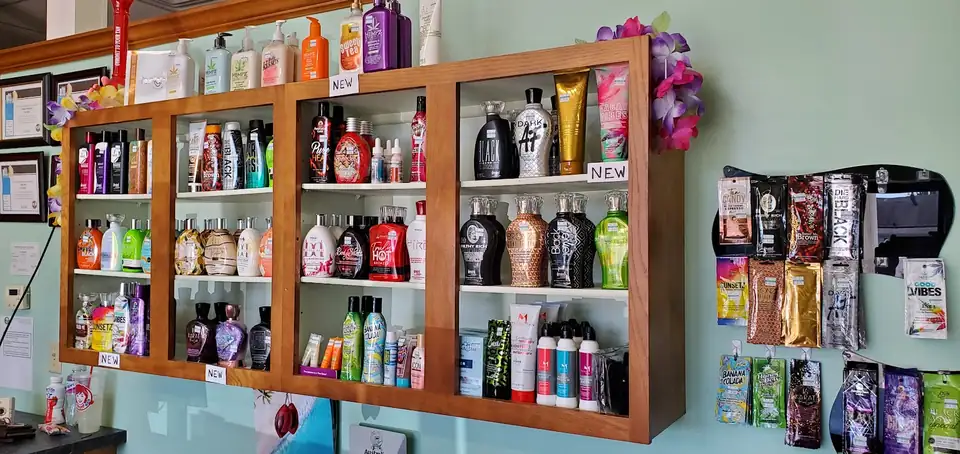
Dry skin is basically a bad canvas. Indoor tanning lotions are made to keep skin moisturized while you tan, and many add color or skincare extras on top. Think of the lotion wall as a menu: same goal, very different flavors.
Quick reality check before we nerd out: no lotion makes UV harmless, and none replace eyewear or short sessions.
Lotion types at a glance
| Type | What it does | Best for | Heads up |
|---|---|---|---|
| Accelerator or intensifier | Moisturizes, no added color | First timers, base building | The “boost” ingredients have thin evidence |
| Bronzer | Adds color from DHA, erythrulose or instant cosmetic tint | Extra depth once you have a base | Can streak, can stain light fabrics |
| Tingle or hot action | Warming, flushing feeling from ingredients like benzyl nicotinate | Experienced tanners who like the feel | Patch test first; not for sensitive skin or the face |
| Face or anti aging | Lighter formula for the face, often with skincare ingredients | Faces, necks, chests | Use a face product, not your body tingle |
| Sensitive or fragrance free | Fewer extras, gentler feel | Reactive or easily irritated skin | Still patch test |
| Tattoo stick | Covers ink with a barrier balm | Anyone with tattoos they love | Not for fresh, healing tattoos |
| After tan or extender | Moisturizes after, some add a touch of DHA | Keeping color looking fresh | Daily use works best |
Accelerators and intensifiers
These have no added color. They lean hard on moisturizers, and many list ingredients like tyrosine that are marketed to support your natural tanning process.
The honest part: tyrosine is a building block of melanin, but a 1987 dermatology study found two tyrosine tan accelerators did not boost tanning, and the researchers noted the skin’s outer layer barely lets tyrosine in. So love intensifiers for the hydration and the feel, and do not expect magic.
Pro tip: New to tanning? An intensifier is the classic first bottle. No color means no streaks while you learn.
Bronzers
Bronzers add color on top of your tan. There are three main kinds, and lots of bottles mix them:
- DHA bronzers: DHA reacts with the very top layer of skin to create a brown color that develops over a few hours. Delayed, not instant.
- Erythrulose: a slower self tanning sugar that INCIDecoder notes takes longer to show but can last longer, so it is often paired with DHA.
- Cosmetic or instant bronzers: tint like caramel color that you see right away and that rinses off in the shower.
Labels like double or triple bronzer are brand marketing for stronger or layered bronzing. There is no official standard for what those words mean, so compare the bottles, not the hype.
Pro tip: Bronzer streak insurance: exfoliate first, use a thin even layer, wash your palms right after, and blend wrists, ankles and knees with what is left on your hands.
Tingle and hot action lotions
That warm, pink, prickly feeling comes from ingredients like benzyl nicotinate, a niacin relative. Studies show it widens tiny blood vessels near the skin’s surface, which raises blood flow and causes redness and warmth. Some people love the sensation. Some people absolutely do not.
- Patch test a small spot on your forearm before going full body.
- Keep tingles off your face, lips, eyes and any freshly shaved or waxed spots.
- Skip tingles if you have sensitive skin, rosacea or eczema, or if your doctor has told you to avoid them.
- Wash your hands right after. Tingle plus eye rub is a plot twist nobody wants.
The flush is a reaction to the ingredient, not a sign of a better tan.
Wait, what is BHA?
Great question, because BHA means different things depending on where you see it:
- Beta hydroxy acid: the most common meaning in skincare. The FDA says the BHA most used in cosmetics is salicylic acid, an exfoliating ingredient found in some prep scrubs and acne focused products. The FDA also notes products with salicylic acid can make skin more sensitive to the sun, so they should come with sun protection directions.
- Butylated hydroxyanisole: a totally different BHA. It is a synthetic antioxidant used in small amounts to help keep some products from going off.
- Did you mean DHA? In the tanning world, DHA (dihydroxyacetone) is the bronzing ingredient. One letter, very different job.
We could not find BHA used as its own lotion category in indoor tanning. Exfoliating with a BHA product before a spray tan can help with an even finish, but spray tan pros generally say to skip AHA and BHA products for several days after a sunless tan because they can fade it faster. If you use salicylic acid skincare and tan with UV, ask your doctor or pharmacist about sun sensitivity.
Face, cooling and anti aging lotions
Faces tend to be more delicate and more breakout prone than legs, so many brands make lighter face formulas, often with skincare ingredients like peptides or hyaluronic acid. Cooling lotions add ingredients that feel fresh on the skin. Anti aging on a tanning lotion is marketing for its skincare ingredients, and it does not undo UV.
Sensitive skin and fragrance free
If scented products make you itchy, look for fragrance free or sensitive skin formulas. Fragrance is a common cause of cosmetic skin reactions, so fewer extras can mean fewer surprises.
Tattoo protectant sticks
UV can fade ink over time. Tattoo sticks are balms you swipe over your ink before tanning to help cover it. Brand new tattoos are still healing, so keep UV off them entirely.
After tan moisturizers and tan extenders
After tan lotions keep skin hydrated, which helps your color look even and fresh as skin naturally sheds. Some extenders add a little DHA to keep the glow going. Moisturize daily and pat dry after showers.
Why indoor lotion, not outdoor oil or SPF, in a bed
Indoor lotions are made for tanning beds. Outdoor oils are made for the beach and are not designed for bed acrylics. Sunscreen is made to block UV, which is a great idea outside and the opposite of what a tanning session is set up for, so your consultant adjusts your session time instead.
Outside, wear broad spectrum sunscreen. Inside the bed, keep your goggles on and your time short.
Ingredient glossary
- Ceramides
- Fats your skin naturally has between its cells. They help support the skin barrier and help skin hold on to moisture.
- Collagen
- A big protein that binds lots of water, so in a lotion it mainly hydrates the surface. It is too large to soak in and rebuild your skin’s own collagen.
- Hyaluronic acid
- A humectant that holds a lot of water, so it helps hydrate the outer layer of skin.
- Peptides
- Short chains of amino acids. Some, like palmitoyl pentapeptide 4, have promising but mostly manufacturer sponsored studies on the look of fine lines.
- Tyrosine
- An amino acid melanin is built from. Marketed as a tan booster, but studies found it did not enhance tanning when applied to skin.
- DHA and erythrulose
- Sugars that react with the top layer of skin to create a brown color. DHA shows in hours; erythrulose is slower and often paired with DHA.
- Caffeine
- An antioxidant often added to body products. Claims about firming or cellulite have limited evidence on real people.
- Vitamins C and E
- Antioxidants that help protect the formula and may support skin. Vitamin C is famously unstable.
- Coconut oil, hemp seed oil, shea butter
- Emollients that soften and help moisturize. Coconut oil can clog pores for some people.
- Silicones (like dimethicone)
- Make lotion glide on silky and form a light protective layer that helps lock in moisture.
- Aloe
- Soothing and moisturizing feel. Much of the evidence is anecdotal, but it feels nice.
- Carrot extract and beta carotene
- Carrot root extract contains beta carotene, an orange pigment and antioxidant.
- Melanin boosters
- A marketing term, not a specific ingredient. Check what is actually on the label.
- Niacinamide
- Vitamin B3. Well studied in skincare and may help support the skin barrier and even looking tone.
- Caramel
- A cosmetic colorant used for instant bronze color that washes off.
- Anti odor and anti orange tech
- Brand terms for ingredients meant to soften DHA’s biscuity smell and keep color looking brown, not orange. Formulas vary, so results do too.
How to pick a lotion
- Building a base on Levels 1 to 3: start with an intensifier, no color, no tingle.
- Already have color or moving up to Levels 4 to 6: many people add a bronzer for extra depth.
- Sensitive skin: fragrance free, no tingle, patch test.
- Face: a face specific formula.
- Tattoos: add a tattoo stick.
Not sure? Ask the front desk. Picking lotions is our love language.
How to apply like a pro
- Start with clean, dry, exfoliated skin.
- Use a thin, even layer. More lotion does not mean more tan.
- Do your back with a long stroke or a friend.
- Wash palms and between fingers when you are done, especially with bronzers.
- Let it soak in a minute before you lie down.
Bronzer, clothes and sheets
Bronzers can transfer before they set. Wear loose, dark clothes after your session, and skip white sheets that night. Instant cosmetic color usually washes out of fabric, but DHA can leave a lasting stain on what it touches, so go easy on light fabrics.
Storing your lotions
- Keep bottles cool and out of hot cars. Heat can break formulas down.
- Close the cap tight.
- If it smells off, separates or changes color, it is time to say goodbye.
Lotions at Sun Spot
We carry lotions right at the counter. One fan favorite is Devoted Creations White 2 Bronze Blackberry Glaze, a dark DHA bronzer with anti orange agents, vitamin C and ceramides, plus a big blackberry scent. It is $43 for a bottle or $4.75 for a packet if you want to try it first.
Friendly reminder: this is general info, not medical advice. If you have a skin or health condition, are pregnant, or take meds that can make you sensitive to light (some antibiotics, acne meds and more), check with your doctor or pharmacist first.
FAQ
What is the difference between an intensifier and a bronzer?
Intensifiers moisturize and have no added color. Bronzers add color from DHA, erythrulose or instant cosmetic tint.
What does BHA mean on a tanning or skincare product?
Usually beta hydroxy acid, most often salicylic acid, an exfoliant that can increase sun sensitivity. It can also mean butylated hydroxyanisole, an antioxidant used to preserve products. In tanning, you might be thinking of DHA, the bronzing ingredient.
Why does tingle lotion make my skin red and warm?
Ingredients like benzyl nicotinate widen tiny blood vessels near the surface, which increases blood flow. Patch test first and keep it off your face.
Does collagen in lotion rebuild my skin’s collagen?
No. Collagen is too big to soak in that deep. In a lotion it mainly hydrates the surface.
Can I use sunscreen or outdoor oil in a tanning bed?
Use an indoor tanning lotion in the bed. Save outdoor oils for outside and wear broad spectrum sunscreen outdoors.
Sources
- FDA: Tanning Products (lamps, booths, beds, sunless sprays)
- FDA: Beta Hydroxy Acids in cosmetics
- Jaworsky C, Ratz JL, Dijkstra JW. Efficacy of tan accelerators. J Am Acad Dermatol, 1987 (PubMed)
- Agin PP, et al. Tyrosine does not enhance tanning in pigmented hairless mice. Photochem Photobiol, 1983
- Comparison of blood flow to cutaneous temperature and redness after topical benzyl nicotinate. J Biomed Opt, 2006 (PubMed)
- Kinetics of blood flow after topical benzyl nicotinate on different anatomic sites (PubMed)
- DermNet: Dihydroxyacetone (DHA) and sunless tanning
- American Academy of Dermatology: How to apply self tanner
- INCIDecoder: Erythrulose
- INCIDecoder: Soluble Collagen
- INCIDecoder: Hyaluronic Acid
- INCIDecoder: Ceramide NP
- INCIDecoder: Niacinamide
- INCIDecoder: Palmitoyl Pentapeptide 4
- INCIDecoder: Caffeine
- INCIDecoder: Caramel
- INCIDecoder: BHA (butylated hydroxyanisole)
- INCIDecoder: Carrot root extract
- INCIDecoder: Dimethicone
- INCIDecoder: Ascorbic Acid
- INCIDecoder: Tocopherol
- INCIDecoder: Shea butter
- INCIDecoder: Coconut oil
- INCIDecoder: Hemp seed oil
- INCIDecoder: Aloe leaf juice